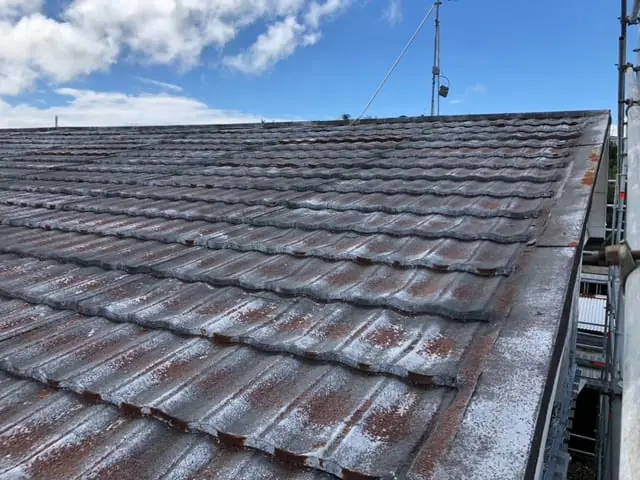
Why Regular Maintenance Saves Money
New Zealand homeowners spend an average of $25,000–$45,000 on a roof replacement. The single most effective way to delay that cost or significantly reduce it when the time comes is regular maintenance. A $300 annual moss treatment prevents $15,000 of tile damage. A $150 gutter clean prevents $5,000 of fascia and ceiling repair. A $500 flashing re-seal prevents a $3,000 leak investigation and interior remediation.
The maths is straightforward: proactive maintenance costs a fraction of the reactive repairs it prevents. Yet many Auckland homeowners only call a roofer when water is already dripping through their ceiling by which point the damage extends well beyond the roof itself.
This guide gives you a practical framework for maintaining your NZ roof regardless of its material type, with seasonal action items and a complete maintenance schedule you can follow year to year.
Seasonal Maintenance Guide for Auckland
Summer (December–February)
Auckland's summer is the best time for professional roof work dry conditions allow thorough inspection and treatment. Key summer tasks:
- Schedule professional roof inspection and moss treatment for tile roofs
- Check and re-seal silicone sealant around any roof penetrations (skylights, pipes, antennae)
- Clear summer leaf accumulations from gutters (pohutukawa drops heavily in summer)
- Inspect UV-exposed rubber flashing for cracking Auckland's summer UV is intense
- Consider roof painting or restoration if tiles are looking weathered summer weather gives paint the best curing conditions
Autumn (March–May)
Autumn is the most critical maintenance period you want your roof in perfect condition before Auckland's wet winter arrives. Essential autumn tasks:
- Gutter clean: Remove all leaf accumulation before the heavy rain season. Check downpipes are clear and water flows freely.
- Inspect and tighten any loose gutter brackets or sagging gutter runs
- Check ridge cap mortar for cracking or loose segments winter wind events can dislodge them
- Inspect all visible flashing for lifted edges or failed sealant
- Ground-level visual inspection with binoculars look for any lifted, cracked or missing tiles before the rain season begins
Winter (June–August)
Auckland winters bring sustained rainfall and occasional severe wind events. During winter:
- Check ceilings after heavy rain events for new water staining
- Clear gutters of any mid-winter leaf and debris buildup
- After significant storms, do a ground-level check for fallen tile fragments, lifted metal, or displaced ridge caps
- If you find a leak in winter, call a roofer promptly leaving an active leak through a further 3–4 months of rain causes disproportionate damage
Spring (September–November)
Post-winter assessment and preparation for summer:
- Post-winter roof inspection assess any winter storm damage
- Final gutter clean before summer
- Check that autumn moss treatment has been effective; re-treat if growth persists
- Assess condition of roof coating is it due for repainting this summer?
Concrete Tile Roof Maintenance
Concrete tile roof maintenance is critical for Auckland homes built between 1970 and 2010. Tiles are durable, but they require specific care to reach their full potential lifespan:
Annual Moss & Lichen Treatment
Biological growth on concrete tiles is the single biggest maintenance issue in Auckland's climate. Moss and lichen:
- Hold moisture against tile surfaces constantly, accelerating surface erosion
- Develop physical root structures that lift tile edges as they expand
- Block valleys and gutters as dead material accumulates
- Retain water in ridge cap joints, softening and eroding mortar
The right treatment method: Soft-wash biocide treatment never pressure washing. A biocide solution (typically a quaternary ammonium or similar product) is applied and allowed to dwell, killing biological growth to the root. Dead matter washes off over subsequent rain events. Pressure washing, by contrast, strips the surface coating from concrete tiles and destroys the granule texture that protects the tile substrate permanently reducing tile lifespan.
Re-bedding and Re-pointing Ridge Caps
The mortar (bedding) and flexible pointing that holds ridge caps in place deteriorates over time. Cracked, loose, or missing mortar allows water to enter at the ridge often the highest point of a tile roof and a common, difficult-to-find leak source.
Ridge cap re-bedding and re-pointing should be assessed every 5–10 years and done whenever significant cracking or gaps are present. This is professional work the ridge line is high, exposed, and requires the right mortar mix and flexible pointing compound to hold up.
Valley Maintenance
Tile roof valleys accumulate debris rapidly. Partially or fully blocked valleys cause water to back up and flow under adjacent tiles. Annual debris clearance from valleys (ideally at the same time as gutter cleaning) is important maintenance on all Auckland tile roofs.
Iron & Metal Roof Maintenance
Colorsteel and iron roof care is lower-maintenance than tiles in some respects no moss, no mortar but metal roofs have their own specific maintenance requirements:
Regular Visual Inspection for Rust
Walk around your property regularly (binoculars help) and look for orange-brown rust staining running down from the roof. This indicates surface oxidation has begun. Caught early, surface rust can be treated and re-coated without sheet replacement. Left unchecked, rust perforates the metal within a few years.
Re-coating at the Right Time
The critical maintenance decision on a metal roof is when to re-coat. The right time is before the existing factory coating fails to bare metal typically when you see chalking (a white powdery residue when you rub your hand on the roof surface), significant colour fading, or early rust staining at scratches and edges. This is typically every 10–15 years for inland Auckland properties and every 8–10 years in coastal areas.
Re-coating a metal roof with failing but intact coating costs a fraction of replacing sheets that have rusted through due to delayed re-coating.
Screw and Fastener Inspection
On older metal roofs with exposed screw fixings, corroded screws eventually pull through the oversize hole left by rust, creating water entry points. Stainless steel screw replacement is inexpensive when done prophylactically expensive when the result is a leak investigation.
Sealant and Lap Maintenance
Re-seal all penetrations, end laps, and flashings every 8–12 years. Butyl tape and silicone sealants have a finite service life. Failed sealant at a pipe penetration or sheet overlap is one of the most common metal roof leak causes we encounter, and one of the easiest to prevent with timely re-sealing.
Gutter Maintenance
Gutter maintenance is the most straightforward, most impactful, and most neglected roof maintenance task for Auckland homeowners. The consequences of neglected gutters include:
- Overflow during heavy rain causing fascia saturation and rot
- Water pooling against foundations increasing subfloor moisture
- Weight of saturated debris pulling gutters away from fascia
- Blocked downpipes forcing water back along gutter and under roofing material at the eave
- Mosquito breeding in standing water in blocked gutters
Gutter cleaning frequency guide for Auckland:
| Property Type | Recommended Cleaning Frequency |
|---|---|
| Standard suburban property, no overhanging trees | Once annually (late autumn) |
| Property with deciduous trees overhanging | Twice annually (late autumn + late spring) |
| Titirangi / West Auckland under heavy native bush | 3–4 times annually |
| Properties with pohutukawa overhang | Twice annually (autumn + summer pohutukawa drops heavily in summer) |
| Coastal properties with seed-bearing trees | Twice annually minimum |
Safety Warning: When NOT to DIY
Critical Safety Warning
Falls from height are one of the leading causes of serious injury and death in New Zealand. The Health and Safety at Work Act 2015 requires that any work at height above 2.4m uses appropriate fall protection. Domestic roofs in Auckland are typically 4–8 metres above ground a fall from this height is frequently fatal.
The following tasks should never be attempted by homeowners without professional fall protection equipment: Any task requiring walking on the roof surface, ridge cap inspection or repair, valley clearing from above, and flashing inspection at height.
What homeowners can safely do:
For any task that requires getting onto the roof itself, engage a professional roof maintenance specialist. Our team carries full fall protection equipment and scaffolding for any elevated work the cost of a professional maintenance visit is trivial compared to the consequences of a fall.
Complete Roof Maintenance Schedule
| Task | Concrete Tiles | Metal/Iron | Who Does It |
|---|---|---|---|
| Ground-level visual inspection | 2x yearly | 2x yearly | Homeowner |
| Gutter clean | 1–4x yearly | 1–4x yearly | Homeowner/Professional |
| Moss/biocide treatment | Annually | Not required | Professional |
| Professional roof inspection | Every 2–3 years | Every 3–5 years | Professional |
| Valley debris clearance | Annually | Annually | Professional |
| Ridge cap re-bedding/pointing | Every 5–10 years | N/A | Professional |
| Re-seal penetrations and laps | Every 8–12 years | Every 8–12 years | Professional |
| Rust treatment | N/A | As needed (inspect annually) | Professional |
| Re-coat / repaint | Every 12–15 years | Every 10–15 years | Professional |
| Full restoration or replacement assessment | At 20–25 years | At 25–30 years | Professional |
When to Call a Professional
Call a licensed roofing professional immediately if:
- You notice new water staining on your ceiling after rain
- You can see daylight through the roof from the roof space
- Your ground-level inspection reveals missing tiles, lifted sheets, or visible gaps in ridge caps
- Your roof is over 20 years old and hasn't been professionally inspected in the last 3 years
- Your gutters overflow in moderate rain (indicating blockage or undersizing)
- After a severe storm event
Call Delta Roofing on 022 196 9021 or submit an online enquiry for a professional roof assessment. We cover all Auckland suburbs and can schedule inspections around your availability.