Call Delta Roofing now on 022 196 9021. We offer rapid-response leak repair across all Auckland suburbs.
A leaking roof is a home emergency. Water ingress can damage ceiling plaster, insulation, electrical wiring, timber framing, and your possessions and the damage accelerates rapidly once started. Our roof repair service in Auckland provides rapid-response solutions. Here is exactly what to do, step by step.
What to Do Right Now (Emergency Steps)
If you have discovered an active roof leak, take these steps immediately:
- Protect your belongings: Move furniture, electronics, and valuables away from the affected area. Place buckets under active drips. Lay down towels or plastic sheeting to protect floors.
- Relieve ceiling pressure: If water is pooling above a ceiling panel or plasterboard, it may collapse suddenly under the weight. If you can see a visible bulge, carefully pierce the ceiling at the lowest point with a screwdriver to create a controlled drain. This is counterintuitive but prevents a catastrophic ceiling collapse.
- Turn off power if necessary: If water is near electrical outlets, light fittings, or fuse boards, turn off power to the affected circuit at the switchboard. Water and electricity are a serious hazard.
- Document the damage: Take photos and video of the leak, the water damage, and any ceiling or wall damage. This documentation is important for insurance claims.
- Do NOT go on the roof: A wet, windy roof is one of the most dangerous environments you can put yourself in. Do not attempt to access the roof in adverse conditions. Wait for a professional.
- Call your roofer: Contact Delta Roofing on 022 196 9021. We offer same-day or next-day emergency response across Auckland.
- Contact your insurer: If the leak is the result of storm damage or a sudden event, call your home insurer to start the claims process. They will advise on the claims procedure and authorised repairers.
Common Causes of Roof Leaks in Auckland
Understanding what causes roof leaks helps you recognise warning signs before a full leak develops. The most common causes we encounter across Auckland are:
Failed Flashings
Flashings are the metal or rubberised seals around roof penetrations chimneys, skylights, vents, valleys, and where the roof meets a wall. They are the single most common cause of roof leaks. Lead, butyl, and EPDM flashings deteriorate over 15–20 years, developing splits, lifting edges, and gaps that allow water to track under the roofing material.
Cracked or Broken Tiles
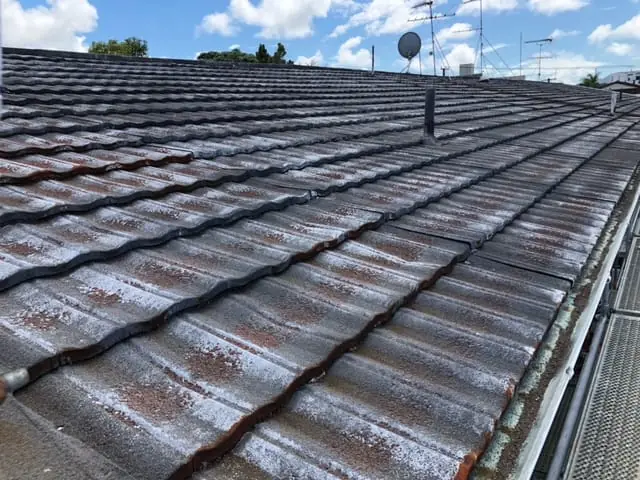
A cracked or broken tile roof creates a direct path for water into the roof structure. Tiles crack from foot traffic, falling branches, thermal stress, and UV degradation. Even a hairline crack in a single tile can allow significant water ingress during heavy Auckland rainfall.
Failed Ridge Bedding
Ridge capping mortar bedding fails after 15–25 years, allowing ridge tiles to shift and water to enter at the ridge line. This is particularly common in Auckland homes with concrete tile roofs built in the 1970s–1980s.
Deteriorated Underlay
The roofing underlay beneath tiles or metal is the secondary waterproof barrier. Old bitumen felt underlay becomes brittle and tears; woven polypropylene underlay can degrade under UV exposure where it is exposed at eaves. A failed underlay means water that gets under the outer cladding has no secondary barrier.
Blocked Valleys and Gutters
Valley flashings accumulate leaves and debris that hold moisture and accelerate flashing degradation. Blocked gutters cause water to back up under the eave detail, saturating the fascia, soffit, and eventually penetrating the internal ceiling.
Roof Penetrations
Every vent pipe, electrical conduit, antenna mount, and skylight that penetrates the roof is a potential leak point. The seals around penetrations deteriorate over time.
Corrosion on Metal Roofing
Iron and steel roofing develops rust at fixings, in low spots where water pools, and along the laps where the coating fails first. Rust-through creates direct holes in the roof. Auckland's coastal salt air significantly accelerates corrosion in suburbs within 5km of the coast.
Signs Your Roof Is Leaking
Not all roof leaks announce themselves with a drip. Look for these early warning signs:
- Brown or yellow water stains on ceilings or walls
- Peeling or bubbling paint on interior walls or ceilings
- Musty or damp smell in the roof space or upper rooms
- Mould growth on ceiling surfaces or in roof space insulation
- Visible daylight through the roof when viewed from the roof space
- Rotting timber in the roof space (visible as dark, soft, or crumbling wood)
- External signs moss growth in specific areas, rust staining in gutters, loose or raised ridge tiles
Why You Must Act Fast
A small roof leak that is ignored will not stay small. Water damage escalates rapidly because:
- Structural timber absorbs moisture wet timber rafters, purlins, and battens develop rot within weeks. Once structural timber is compromised, what started as a minor roof repair becomes a major structural remediation.
- Insulation becomes saturated wet insulation loses all thermal performance and becomes a permanent moisture reservoir, promoting mould growth throughout the roof space.
- Mould spreads rapidly spores released from mould in the roof space circulate throughout the house, posing health risks particularly to children and those with respiratory conditions.
- Electrical hazards develop water tracking along ceiling joists and into light fittings or electrical cables creates serious fire and electrocution risks.
- Insurance complications arise if an insurer determines that you knew about a leak and did not act reasonably promptly to address it, they may decline or reduce a claim for consequential damage.
Repair Options for Leaking Roofs
The right repair depends entirely on the cause of the leak. Common repair approaches include:
- Flashing replacement: Remove and replace the failed flashing with new lead, EPDM, or butyl material. This is a permanent fix that will last 15–25 years.
- Tile replacement and repointing: Replace cracked tiles and repoint failed ridge and hip capping bedding. Addresses the most common tile roof failure modes. Regular maintenance after repairs prevents recurrence.
- Roof resealing: Apply a compatible sealant to joints, overlaps, and penetrations as a temporary measure. Note: resealing without addressing the root cause is a short-term fix only.
- Valley flashing replacement: Strip, clean, and install new valley flashing material over a correctly formed substrate.
- Partial re-roof: Where a section of the roof has failed underlay or widespread damage, partial re-roofing of the affected section may be more cost-effective than full replacement.
When to Call Delta Roofing
Call Delta Roofing if you notice any of the following in Auckland:
- Active dripping or water staining appearing after rain
- A leak that has been temporarily managed but not permanently repaired
- Recurring leaks that have been repaired multiple times without success
- Storm damage displaced tiles, lifted ridge capping, or damaged flashings
- Any roof that is 20+ years old that has not had a professional roof inspection in the last 3 years
We offer emergency leak response across Auckland suburbs North Shore, Central Auckland, East Auckland, West Auckland, and South Auckland typically within 24–48 hours of your call.
Frequently Asked Questions
Quick Answers: Leaky Roof Repair in Auckland
Call Delta Roofing Auckland on 022 196 9021 for emergency roof leak response. We offer rapid-response leak repair across all Auckland suburbs typically within 24–48 hours. We are LBP-licensed, fully insured, and provide written quotes before any work starts.
Storm damage causing a sudden roof leak is generally covered by NZ home insurance policies, subject to your policy excess and exclusions. Gradual leaks caused by wear and tear, blocked gutters, or pre-existing defects are typically not covered. Contact your insurer immediately to start the claims process and ask about authorised repairers.
Delta Roofing typically responds to emergency roof leaks in Auckland within 24–48 hours. For severe or active storm damage situations, we prioritise emergency jobs. Call 022 196 9021 for urgent situations, leave a message with your details and we will return your call as soon as possible.
The most common causes of roof leaks in Auckland are: failed flashings around chimneys and skylights (most common), cracked or broken concrete tiles, deteriorated ridge bedding, failed roofing underlay, blocked valleys retaining water, and corrosion on metal or iron roofs particularly in coastal Auckland suburbs where salt air accelerates corrosion.
Locating the source of a roof leak requires systematic inspection both internally (roof space inspection with a torch, looking for water marks, wet insulation, and daylight) and externally (careful inspection of all flashings, tiles, ridge cappings, valleys, and penetrations). Because water travels, the internal drip point rarely corresponds exactly to the external entry point. A professional inspection by Delta Roofing is the most reliable way to locate a leak.