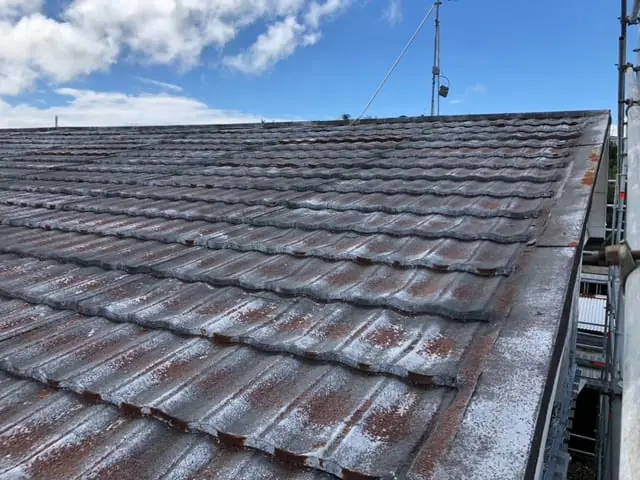
How to Identify Asbestos Roofing
Asbestos cement sheeting commonly known in New Zealand by the brand name "Fibrolite" was widely used in roofing, wall cladding, and eave lining from the 1940s through to the late 1980s. The use of asbestos in construction products was phased out in New Zealand by around 1987, but millions of square metres of asbestos-containing materials remain in existing buildings across the country.
Visual indicators that may suggest asbestos cement roofing include. See our guide on signs of roof deterioration for general indicators across all roof types:
- Installation period: Homes built or re-roofed between 1940 and 1990 are the primary risk period. Any flat-sheet roof material from this era warrants professional assessment.
- Appearance: Asbestos cement sheets are typically grey, beige or weathered white, with a relatively smooth but slightly grainy surface. They are installed in overlapping rectangular sheets, not corrugated iron or formed tiles.
- Weathering patterns: Very old asbestos cement develops a chalky, pitted surface as weathering releases the cement matrix. This is when fibres become most accessible never touch or disturb a weathered asbestos surface without PPE.
- Building records: Auckland Council building consent records may identify asbestos-containing materials in original consent documentation for your property.
If you suspect your roof may contain asbestos, do not touch, drill, break, or disturb it. Commission a sample test from a licensed asbestos assessor a small core sample sent to an accredited laboratory will confirm or rule out asbestos content definitively.
Why Only Licensed Contractors Can Handle It
New Zealand's Health and Safety at Work (Asbestos) Regulations 2016 administered by WorkSafe New Zealand set out strict legal requirements for working with asbestos-containing materials. Under these regulations:
- Class A asbestos work (removal of any amount of friable asbestos, or more than 10m² of bonded asbestos) must only be carried out by a person with a current WorkSafe Class A Asbestos Removal Licence.
- Removal of bonded asbestos (like asbestos cement roofing) under 10m² is Class B work, requiring a Class B licence minimum.
- All asbestos work must be notified to WorkSafe at least 5 business days before work commences on a Class A job.
- Asbestos waste must be disposed of at a licensed disposal facility it cannot be taken to standard landfill or dumped on-site.
- Workers must have completed the appropriate asbestos awareness training and must use approved PPE including appropriate respirators, disposable coveralls, and gloves.
Homeowners who attempt DIY asbestos removal not only create serious health risks for themselves and their families, but also face significant legal consequences. If you engage an unlicensed contractor to remove your asbestos roof, you may also be liable as the person in control of the work site.
WorkSafe NZ Requirements for Asbestos Roof Work
A compliant asbestos roof removal in Auckland requires the following WorkSafe NZ processes. After removal, a professional roof assessment helps identify the best replacement option:
- Asbestos Management Survey: Before removal, a licensed asbestos assessor must identify and document all asbestos-containing materials, their condition, and the appropriate removal methodology.
- Asbestos Removal Control Plan: The licensed removalist prepares a site-specific plan covering work methods, air monitoring, waste management, and emergency procedures.
- WorkSafe Notification: Class A work must be notified to WorkSafe at least 5 business days in advance via their online notification system.
- Site Preparation: Exclusion zones established, signage erected, adjacent areas protected from fibre release.
- Air Monitoring: During Class A work, independent air monitoring may be required to confirm airborne fibre levels remain within safe limits.
- Clearance Certificate: After removal, an independent licensed asbestos assessor issues a clearance certificate confirming the area is safe for unrestricted re-entry.
- Waste Disposal Records: Asbestos waste must be taken to a licensed disposal facility with transfer documentation maintained.
The Asbestos Roof Removal Process
A properly managed asbestos roof removal follows these stages:
- Assessment and planning: A licensed asbestos assessor inspects the roof, takes samples if required, and documents the material type, condition and quantity. A removal control plan is prepared.
- WorkSafe notification: The licensed removalist notifies WorkSafe NZ of the planned work.
- Auckland Council building consent: For the replacement roofing, a building consent is usually required when changing material type. Your contractor handles this application.
- Scaffolding and site setup: Full perimeter scaffolding erected. Ground protection laid below the roof. Adjacent properties may need notification if in close proximity.
- PPE and containment: Workers in appropriate respiratory protection (P2 or P3 respirators), disposable coveralls, gloves, and eye protection. Any ventilation systems in the roof space are sealed to prevent fibre migration into the building.
- Careful sheet removal: Sheets are wetted down (if conditions allow) to suppress dust, then carefully removed intact rather than broken. Whole sheets are double-wrapped in heavy polythene on-site.
- Waste disposal: Wrapped asbestos waste is transported in a sealed vehicle to a licensed asbestos waste disposal facility. Transfer documentation maintained.
- Clearance inspection: Independent assessor confirms area is clean and issues clearance certificate.
- New roof installation: Your roofer installs the replacement roofing on the now-clear structure.
Replacement Options After Asbestos Removal
Once your asbestos cement roof has been safely removed, a full roof replacement gives you a clean slate to choose the best modern roofing for your home:
- Colorsteel Corrugated or Tray: The most popular replacement choice. See our Colorsteel metal roofing guide for full details. Modern Colorsteel is lighter than asbestos cement, easier to install, and requires only re-coating (not replacement) after its initial lifespan. Available in a wide range of colours to match your home's aesthetic.
- Concrete Tiles: For heritage or character homes where the original asbestos cement was a flat-profile product imitating tiles, commercial or residential concrete tiles may be a better visual match. Heavier than metal ensure your roof structure is assessed for the additional load before specifying tiles.
- Long-run Metal Tray: Modern look for contemporary homes. Low-pitch capability and concealed fasteners make it a premium choice for flat-ish rooflines previously covered with asbestos cement.
- TPO/Membrane Systems: For very low-pitch or flat roof areas, an appropriate membrane system is the technically correct solution.
The structural framing under your old asbestos roof should be assessed before new roofing is specified. Some older homes have undersized rafters that were designed to the lighter load of asbestos cement tile roofing may require structural reinforcement.
Council Consent for Asbestos Roof Work
Auckland Council building consent is generally required when:
- Changing roof material type (e.g., asbestos cement to Colorsteel or tiles)
- Any structural modifications are made to the roof framing
- A like-for-like replacement using equivalent materials (sometimes exempt, check with your contractor)
The LBP (Licensed Building Practitioner) carrying out the work issues an LBP Record of Work certificate on completion, which forms part of the building consent documentation. This is a legal requirement for restricted building work under the Building Act 2004.
Consent applications for Auckland Council can take 10–20 working days. Planning your asbestos roof project well in advance is important don't leave it until your roof is actively deteriorating before starting the consent process.
Cost of Asbestos Roof Removal in NZ
Asbestos roof projects typically involve several cost components:
| Cost Component | Typical Range (NZD) | Notes |
|---|---|---|
| Asbestos assessment/survey | $500–$1,500 | Laboratory testing additional $150–$300 per sample |
| Licensed asbestos removal (per m²) | $50–$120/m² | Depends on accessibility, fibre type, and quantity |
| Asbestos waste disposal | $800–$3,000 | Volume-dependent; licensed facility fees |
| Clearance certificate | $400–$800 | Independent assessor required |
| Building consent (Auckland Council) | $1,200–$2,500 | Council fee for consent application |
| New roof installation | $15,000–$35,000+ | Depending on material, size and complexity |
Total project costs for a standard Auckland home asbestos roof removal and replacement typically range from $25,000–$55,000 all-inclusive. For Auckland-specific new roof pricing, see our detailed cost guide. This is a significant investment, but it eliminates the health risk permanently and delivers a new roof with a 30–50 year lifespan.